
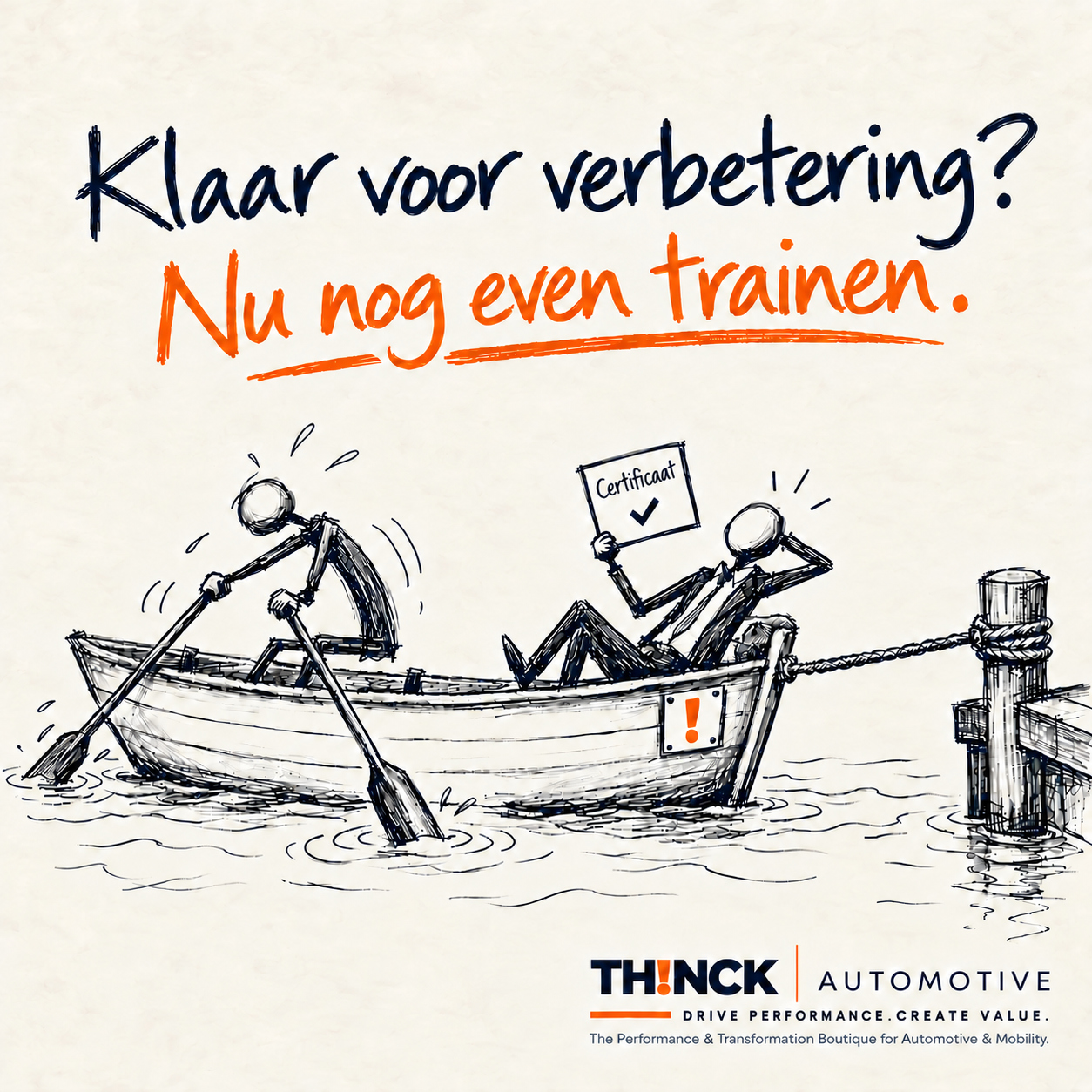
Training does not work!
At least, not if you teach people to row better while the boat is still stuck.
Conversion is lagging? Sales training. Unhappy customers? Hospitality training. Problems in the team? A team-building day. The intervention is often ordered before anyone has established what is actually limiting performance.
There is something reassuring about that. You can buy, schedule and tick off a training course. Management has taken action. 'We invested in our people, didn't we?'
Training as a management alibi.
But what if the problem lies in conflicting priorities, inadequate processes or leadership that continues to reward the old behaviour? The team is asked to improve and change while the organisation keeps it in place. And when improvement fails to materialise, the team supposedly did not apply the training properly. Great for motivation, learning effectiveness and results.
Training and development require a clear strategic context. Where is the business going? What must improve? What tasks, responsibilities and behaviours does that require? And what will management itself do differently?
Visible leadership support means more than approving the budget or opening the training day. It means setting direction, leading by example and creating room for application in daily operations — even when operational demands are at their most intense.
Development also involves a learning curve. New behaviour requires practice, feedback and time. Productivity may initially decline. That is an investment, provided it subsequently leads to demonstrably better performance.
Without application, what remains is mostly cost: the training, the hours away from operations and the frustration of people who want to progress but are held back. Development without context can therefore even deliver a negative return.
Meanwhile, technology, AI and business and revenue models are changing the nature of work. Tasks and responsibilities are shifting, in sales and aftersales as well as in management.
That is why we should not assess people solely on what they can do today. Their capacity to develop is becoming increasingly important. Can they learn new ways of working, challenge their assumptions and translate feedback into different behaviour? Can they — and do they want to — grow with the business?
Someone assessed only on today's skills may be perfectly qualified for yesterday's work.
Training can be a powerful intervention — when you know which problem it addresses, what outcome it is intended to deliver and what the organisation must do to make that possible.
The intervention must always follow the diagnosis. Development takes direction from strategy. Leadership makes that direction visible in practice.
So before ordering the next training programme: does the employee need to learn to row better, or does management first need to free the boat? Or both?
TH!NCK Automotive Drive Performance. Create Value.